

Blog

Clean Title vs. Salvage or Rebuilt: What’s the Difference, and Which One Should You Buy?

logo

A clean title is usually the safest and easiest choice to finance and insure, while salvage and rebuilt titles can cost less upfront but often come with more risk and extra steps.

If you’re shopping for a used car in Muncie, IN, you’ll see listings that say “clean title,” “salvage,” or “rebuilt.” Those labels matter because they affect what the car is worth, how easy it is to get a loan, what your insurance company will cover, and how confident you can feel about the vehicle’s past.

This guide breaks down what each title status means, how it impacts financing and insurance, and what to watch for so you can buy with clarity.

Quick definitions you can use right away

Clean title means the vehicle doesn’t have a “brand” on the title for major damage (like being declared a total loss).
Salvage title typically means an insurance company declared the vehicle a total loss, and it’s not considered roadworthy as-is.
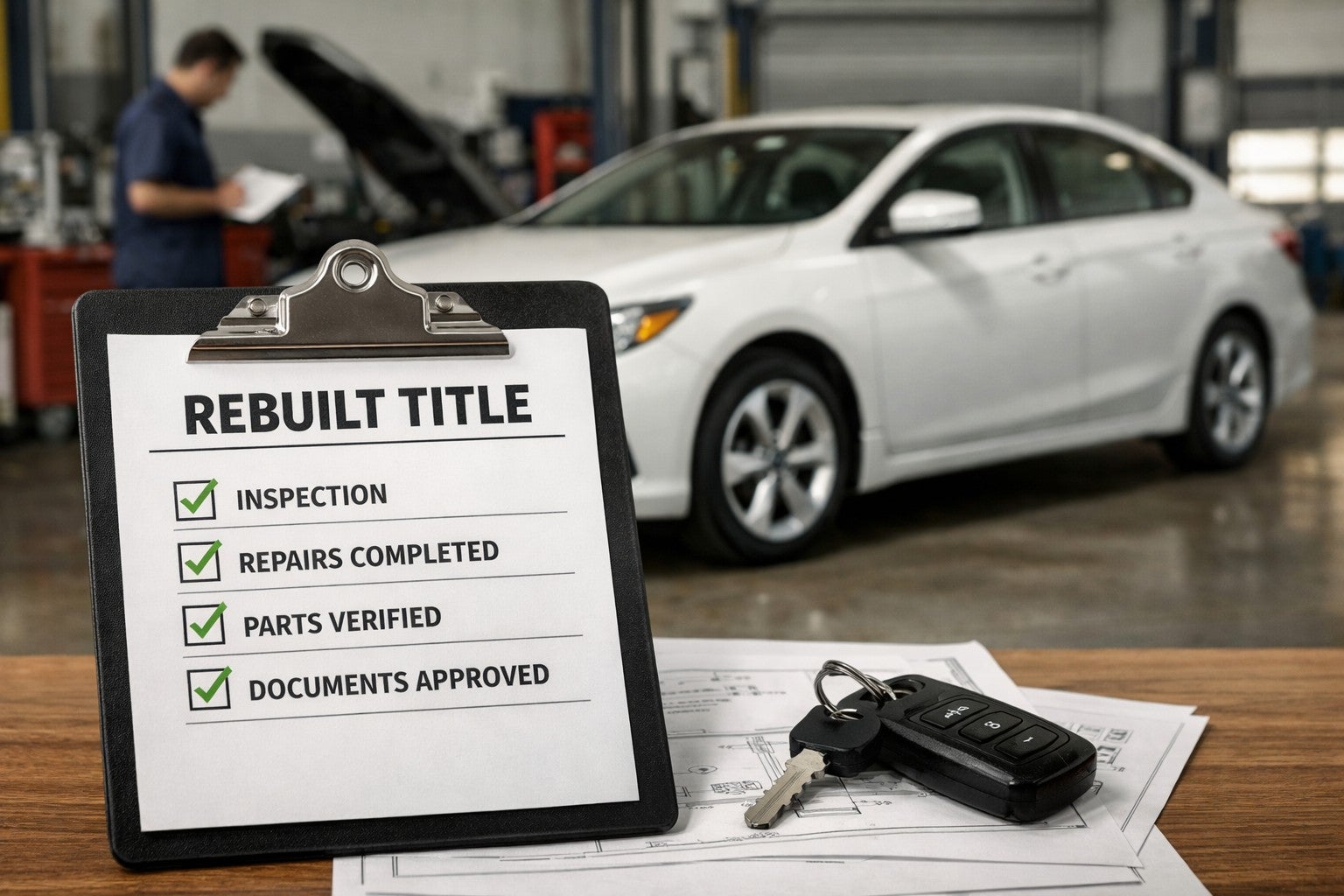
Rebuilt title means the car was once salvage, then repaired and passed a state-required rebuilt inspection process to return to legal road use. 

What does a clean title mean?

A clean title means the vehicle’s title isn’t branded as salvage, rebuilt, junk, flood, or similar categories. It does not mean the car has never been in an accident, and it does not automatically mean “perfect condition.” It simply means the state’s title record doesn’t show a major branding event.

In real-world terms, a clean title is usually simpler for loans, simpler for insurance, and easier to resell later.

What does a salvage title mean?

A salvage title generally means the vehicle was declared a total loss by an insurance company due to damage, theft recovery, or other major event. In many states, a salvage vehicle isn’t meant to be driven on public roads until it’s repaired and re-titled according to state rules.

In Indiana, the state has specific processes and forms for salvage titling and for moving from salvage to rebuilt status. 

What does a rebuilt title mean?

A rebuilt title in Indiana (typically branded “Rebuilt Vehicle”) means the vehicle previously received a salvage title after being declared a total loss or sustaining significant damage, but has since been repaired and completed the state's salvage restoration process, allowing it to be titled, registered, and legally driven again.

In Muncie, Indiana, converting a salvage title to a rebuilt title generally involves submitting the original salvage certificate, an Application for Certificate of Title (State Form 205), an Affidavit of Restoration for a Salvage Motor Vehicle (State Form 44606), proof of ownership for major replacement parts, and applicable fees to the Indiana Bureau of Motor Vehicles (BMV). The vehicle must also undergo an inspection by the Indiana State Police to verify its identity and the ownership and sources of major replacement parts. Once the required documentation and inspection are approved, the BMV issues a title branded “REBUILT VEHICLE,” allowing the owner to complete registration and legally operate the vehicle on public roads.


Because it’s still a branded title, it usually sells for less than a comparable clean-title vehicle. 

Clean vs. salvage vs. rebuilt at a glance

Title status

What it usually means

Can it be legally driven?

Financing impact

Insurance impact

Resale/value impact

Clean title

No major “brand” on the title

Yes

Easiest approvals and best terms

Easiest to get full coverage

Highest resale value

Salvage title

Total loss / major event; not roadworthy as-is

Typically no (until rebuilt)

Often not financeable

Often not insurable for road use

Very low value, limited buyers

Rebuilt title

Previously salvage, repaired and inspected

Yes (after rebuilt process)

Possible, but fewer lenders and tighter terms

Coverage may be limited; full coverage can be harder

Lower value; harder resale

(Exact rules vary by state and insurer/lender, so always verify before you buy.)

How title status affects financing

Rebuilt-title vehicles can be financeable, but they’re harder to finance than clean-title cars. Many lenders see branded titles as higher risk because the vehicle’s value can be harder to verify, and the resale market is smaller.

Here’s what commonly changes when a vehicle is rebuilt:

  • Higher down payment requirements

  • Higher interest rates

  • Shorter loan terms

  • More documentation (inspection paperwork, receipts, or appraisal)

If you’re planning to finance, ask the most important question early: “Will you lend on a rebuilt title for this VIN?” That one sentence can save you hours.

Can you finance a salvage title car?

In most cases, a salvage-title car is not a good candidate for traditional financing because it typically isn’t road-legal until it’s rebuilt and re-titled. Most banks and credit unions don’t want collateral that can’t be registered or insured the normal way.

If a lender does consider it, it’s usually a specialized situation, not a typical auto loan.

How title status affects insurance

A salvage title can make insurance complicated because the vehicle may not be eligible for normal road coverage until it is rebuilt and is legally registered. With rebuilt titles, some insurers will write coverage, but optional coverages like comprehensive and collision may be harder to get, depending on the company and the vehicle. 

In plain English: clean-title cars are usually easy to insure, rebuilt-title cars can be insurable with extra steps, and salvage-title cars are often a “not yet” until the title status changes.

What lenders require matters, too

If you finance a car, the lender typically requires full coverage (not just liability). That’s where rebuilt-title shopping gets tricky: you need a vehicle your lender will finance and an insurer willing to write the coverage your lender requires.

What to watch for with salvage or rebuilt vehicles

A rebuilt title does not automatically mean the car is “bad,” but it does mean you need to verify more. The goal is to understand what happened, how it was repaired, and whether the discount is worth the extra risk.

The biggest risks buyers miss

  • Hidden structural damage
    Frame or unibody repairs can affect alignment, tire wear, and crash safety.

  • Flood and water exposure
    In Indiana, water damage can be a real concern, especially after heavy rain, flash flooding, or storm runoff. This can lead to corrosion, mold, and electrical issues that may not show

  • Airbag and safety-system shortcuts
    A car can look great and still have missing or improperly repaired safety systems.

  • Title washing and paperwork problems
    Title fraud happens, and it’s one reason you should verify history using multiple sources. 

A simple verification checklist (use this before you commit)

What to check

Why it matters

How to verify

VIN history

Confirms title brands, events, and timelines

Vehicle history report + compare dates/mileage

Theft/salvage indicators

Flags reported theft or salvage records

Run a free NICB VINCheck 

Rebuild documentation

Shows what was replaced and by whom

Request receipts, photos, and inspection paperwork

Independent inspection

Finds issues you can’t see in photos

Pre-purchase inspection by a trusted shop

Test drive behavior

Reveals alignment, braking, and electrical quirks

Drive at city + highway speeds, check warning lights

Insurance quote first

Confirms coverage availability and cost

Get a quote using the VIN before purchase

Know what a rebuilt inspection does (and doesn’t do)

Indiana’s rebuilt-vehicle process involves required documentation and an Anti-Theft Unit inspection to confirm the vehicle’s identity and verify that the major component parts and paperwork support the repairs.


That inspection is important, but it’s not the same as a deep mechanical inspection for long-term reliability.

So even if a vehicle is legally “rebuilt,” you should still get your own independent inspection if you want real peace of mind.

When a rebuilt title can be a smart buy

A rebuilt title can make sense when the price difference is large enough to offset the drawbacks. The best candidates are usually buyers who plan to keep the car for a long time and care more about value than resale.

Rebuilt-title vehicles can also work well if:

  • You’re paying cash (or using a lender who approves rebuilt titles)

  • You can secure insurance that fits your needs

  • You have repair documentation and a clean inspection result

  • The damage was well-understood and properly repaired

When you should stick with a clean title

A clean title is usually the better move if you need easy financing, want the widest insurance options, or plan to resell in a few years. It’s also the safer path if you don’t have time to chase paperwork, schedule inspections, and compare insurer policies.

If you want a simple rule of thumb: if you need “easy and predictable,” choose a clean title.

How Stoops Buick GMC of Muncie Can Help

If you’re comparing a clean title vs. salvage or rebuilt and want help finding the right fit, Stoops Buick GMC of Muncie can walk you through options and vehicle history so you can buy with confidence—start browsing our inventory, and you can apply in minutes with our credit app.

Frequently Asked Questions About Clean Title vs. Salvage/Rebuilt

What is the main difference between a clean title and a rebuilt title?

A clean title has no major brand on the title, while a rebuilt title means the car was once salvage and later repaired and inspected for legal road use.

Is a rebuilt title bad?

A rebuilt title isn’t automatically bad, but it does mean the vehicle had a major event in its past, and you should verify repairs, paperwork, and condition more carefully than you would with a clean-title car.

Can you insure a rebuilt title car in Indiana?

Often yes, but coverage options can vary by insurer, and comprehensive/collision may be harder to get than with a clean-title vehicle. 

Can you finance a rebuilt title car?

Sometimes yes, but fewer lenders approve them, and terms may be stricter, such as higher down payments or shorter terms.

Can you drive a salvage title car on the road?

Typically, no, not until it has been repaired and has gone through the rebuilding process required for road use in your state. 

What’s the safest way to shop for a rebuilt title vehicle?

Start by checking VIN history, run a free NICB VINCheck, review repair receipts and inspection paperwork, and get an independent pre-purchase inspection before you buy.


Recommended Posts

logo

Christmas Muncie Mama's Market

Christmas Muncie Mama's Market The holiday shopping season feels more meaningful when the gifts we choose support people in our own community. Christmas Muncie Mama's Market offers a wonderful opportunity to discover unique products, explore small businesses, and enjoy the festive atmosphere. Scheduled for November 14, 2026, at the Delaware County Fairgrounds, this indoor holiday market brings more than 105 curated vendors together across two buildings for a day of shopping and community connection. At Stoops Automotive, we love sharing events that celebrate the creativity and entrepreneurial spirit of Muncie. Whether you're searching for thoughtful holiday gifts, treating yourself to something special, or simply looking for a fun weekend outing, this market offers a great reason to shop locally. A Holiday Market Full Of Possibilities One of the most exciting things about Christmas Muncie Mama's Market is the opportunity to explore products from many different vendors in one location. Unlike traditional shopping trips, a curated market gives visitors a chance to discover businesses they may not have encountered before. Each vendor brings something different to the experience, making every visit an opportunity for discovery. Some shoppers may arrive with a holiday gift list, hoping to find something thoughtful for family members or friends. Others may prefer to browse and see what catches their attention. That flexibility makes the market enjoyable. There's no need to rush between stores or follow a complicated schedule. You can take your time, explore different displays, and appreciate the creativity behind the businesses participating. Why Shopping Small Matters Local businesses help shape the character of a community. Behind every small business is someone investing time, energy, and effort into building something meaningful. When shoppers support local vendors, they help encourage entrepreneurship and keep those businesses connected to their communities. A purchase from a small business can feel especially personal. You may get to meet the person behind the product, learn about their work, or hear what inspired them to start their business. These connections make shopping more than a transaction. They create opportunities for conversation and appreciation. At Stoops Automotive, we understand that strong communities depend on people supporting one another. Events like this remind us how much local businesses contribute to Muncie's personality and economic life. A Fun Outing Beyond The Shopping List Although the market is designed with holiday shoppers in mind, it can also become a memorable outing for friends and families. You might attend with someone who loves discovering new products or invite a friend who enjoys supporting independent businesses. Parents can use the visit as an opportunity to talk with children about thoughtful gift-giving and the importance of supporting local entrepreneurs. Even if you aren't planning to make many purchases, browsing the market can be enjoyable on its own. It's a chance to see what's available in the community, gather gift ideas, and welcome the holiday season without needing an elaborate plan. Plan A Comfortable Shopping Day The indoor setting makes this event especially appealing as November temperatures begin to drop. With more than 105 vendors spread across two buildings, comfortable shoes and a relaxed schedule will help you make the most of the experience. Admission is $4, and parking is free. Consider bringing reusable shopping bags and checking the organizer's updates before heading out. If you're meeting friends or family, choose a convenient meeting location and allow enough time to explore both buildings. It's also smart to think about how you'll transport your purchases. Keeping the vehicle organized before leaving home can make it easier to bring everything back comfortably. Before heading out, check your tires, lights, and windshield visibility. Late-fall weather can change quickly in Indiana, so preparing your vehicle is always a good habit. Why We're Sharing This At Stoops Automotive At Stoops Automotive, we know dependable transportation plays an important role in everyday life. A reliable vehicle helps people get to work, visit loved ones, complete errands, and participate in community activities. But some of the best drives aren't about responsibilities. They're about spending time together, discovering something new, or supporting local businesses. A trip to Christmas Muncie Mama's Market could lead to finding the perfect gift, meeting a talented entrepreneur, or enjoying a memorable afternoon with someone special. That's why we're happy to highlight events that bring the Muncie community together. Celebrating The People Behind Local Businesses Christmas Muncie Mama's Market reminds us that holiday shopping can also be an opportunity to celebrate creativity, hard work, and community connection. With so many vendors gathered in one place, visitors have a chance to support local entrepreneurship while preparing for the festive season. From all of us at Stoops Automotive, we're proud to spotlight events that strengthen the community we serve. We hope this November brings opportunities to shop thoughtfully, support local businesses, and create meaningful holiday memories close to home.

logo

Mileage vs. Age: Which Matters More When Buying a Used Car?

Mileage vs. Age: Which Matters More When Buying a Used Car? Mileage usually matters more for wear and tear, but age matters more for time-related issues like rubber, fluids, electronics, and rust. Top 3 Takeaways A lower-mileage car is not automatically the better buy if it has been sitting, poorly maintained, or stored outside. A newer high-mileage car can be a smart long-term bet if the miles are mostly highway miles and the service history is strong. The best used car is the one with the better maintenance history, cleaner inspection, and lower future repair risk. Mileage vs. Age: The Simple Answer When comparing two used cars, most shoppers look at mileage first. That makes sense because mileage tells you how much the vehicle has been driven. More miles usually means more use on the engine, transmission, suspension, brakes, tires, and interior. But age matters too. Even a low-mileage vehicle can have problems if it is older. Rubber parts dry out, batteries weaken, seals can leak, fluids break down, and technology can become outdated. So, which matters more? The better answer is this: mileage tells you how much the car has worked, while age tells you how long the car has been exposed to time, weather, and storage conditions. To make the best decision, you need to compare both together. Why Mileage Matters When Buying a Used Car Mileage is one of the easiest ways to estimate vehicle wear. A car with 40,000 miles has usually experienced less driving stress than a similar car with 140,000 miles. Every mile adds wear to moving parts. The engine runs, the transmission shifts, the suspension absorbs bumps, and the brakes slow the vehicle down. Over time, those systems need maintenance or replacement. Mileage can also affect resale value. Most buyers prefer lower-mileage vehicles, so a car with fewer miles may be easier to sell later. It may also qualify for better financing terms or extended protection options, depending on the vehicle and lender. However, mileage does not tell the whole story. A 100,000-mile car with regular oil changes and highway driving may be in better shape than a 50,000-mile car that was ignored, driven hard, or used mostly for short trips. Why Age Matters When Buying a Used Car Age matters because cars do not only wear out from driving. They also age while parked. Over time, fluids can absorb moisture or lose effectiveness. Tires can age even if they still have tread. Rubber belts, hoses, bushings, and seals can dry out or crack. Age can also affect electronics and comfort features. Screens, cameras, sensors, switches, and infotainment systems may become outdated or start to fail as the vehicle gets older. Rust is another big factor. A 10-year-old car from a snowy climate may have more corrosion than a 10-year-old car from a warmer area. Salt, humidity, and outdoor storage can all shorten a vehicle’s life. That is why an older car with low miles still needs a close inspection. Quick Comparison: Mileage vs. Age Factor Mileage Tells You Age Tells You Engine wear How much the engine has been used How long seals, gaskets, and fluids have aged Transmission wear How often the vehicle has shifted and driven Whether fluid and internal parts may be aging Suspension wear How many bumps and road miles it has handled Whether rubber bushings and mounts are drying out Tires How much tread may be used Whether tires are too old, even with tread left Technology How much use buttons and screens have had Whether features feel outdated Resale value Lower miles usually help value Newer model years usually help value Long-term reliability Depends on use and maintenance Depends on storage, climate, and maintenance The Best Way to Compare Two Cars A simple way to compare two used cars is to look at mileage, age, maintenance history, condition, and expected future repairs. For example, let’s say you are comparing these two vehicles: Vehicle Age Mileage First Impression Car A 8 years old 55,000 miles Older but low mileage Car B 4 years old 95,000 miles Newer but high mileage At first, Car A looks better because it has fewer miles. But that does not automatically make it the better long-term choice. Car A may have older tires, aging hoses, a weaker battery, outdated tech, and time-related wear. Car B may have more miles, but if those miles came from highway driving and the car has strong service records, it could still be the smarter buy. The right choice depends on the full picture. Use This Simple Scoring System When you are deciding between two cars, give each one a score from 1 to 5 in each category. Category What to Look For Score 1 Means Score 5 Means Mileage Total miles and miles per year Very high mileage for age Reasonable mileage for age Age Model year and time-related wear Older with aging parts Newer with less age-related risk Maintenance Service records and oil changes Little or no history Strong documented history Condition Exterior, interior, tires, brakes Rough or neglected Clean and well cared for Inspection Mechanic or dealer inspection Several concerns Passes cleanly Ownership Cost Tires, brakes, repairs, fuel Expensive soon Lower expected costs The car with the higher total score is usually the better long-term bet. This method helps you avoid picking a car based on mileage alone. What Is Considered Good Mileage for a Used Car? A common rule is that the average driver puts about 12,000 to 15,000 miles per year on a vehicle. That means a 5-year-old car with 60,000 to 75,000 miles is fairly normal. A car with much less mileage than average may look attractive, but you still need to ask why. Was it a weekend car? Was it sitting unused? Was it owned by someone who rarely drove? A car with higher mileage is not always bad either. If it was driven mostly on the highway, serviced on time, and inspected well, it may still have plenty of life left. Mileage should be judged against the vehicle’s age and condition. Miles Per Year Can Tell You a Lot Instead of only looking at the odometer, calculate miles per year. Use this simple formula: Total mileage divided by vehicle age equals average miles per year. Vehicle Age Mileage Average Miles Per Year What It May Mean 5 years 40,000 8,000 Low use 5 years 75,000 15,000 Average use 5 years 110,000 22,000 Heavy use 10 years 70,000 7,000 Low use, inspect for age-related issues 10 years 150,000 15,000 Average use for age A very low miles-per-year number can be good, but it can also mean the car sat for long periods. A very high miles-per-year number may be acceptable if the car has excellent records and mostly highway miles. Highway Miles vs. City Miles Not all miles are equal. Highway miles are usually easier on a vehicle. The engine runs at steady speeds, the transmission shifts less, and the brakes are used less often. City miles are harder. Stop-and-go traffic creates more braking, more shifting, more idling, and more heat. Short trips can also be tough because the engine may not fully warm up. That is why a higher-mileage highway car can sometimes be a better buy than a lower-mileage city car. When possible, ask how the vehicle was driven. You may not always get a perfect answer, but service records, tire wear, brake condition, and overall cleanliness can offer clues. When a Low-Mileage Older Car Makes Sense A low-mileage older car can be a great buy if it was maintained well and stored properly. It may be a good choice if the tires are not too old, the fluids have been changed, the battery is healthy, and the inspection looks clean. It also helps if the vehicle was garage-kept or driven regularly enough to keep systems working. Low mileage is especially helpful on vehicles known for long-term reliability. If the model has a good reputation and the condition checks out, an older low-mileage car can offer strong value. Just do not skip the inspection because of the low odometer reading. When a Newer High-Mileage Car Makes Sense A newer high-mileage car can also be a smart choice. This is especially true if the miles came from commuting or highway driving. A newer car may have better safety features, newer technology, improved fuel economy, and fewer age-related issues. It may also have parts that are easier to find and systems that feel more modern. In some cases, a newer high-mileage car can feel tighter, cleaner, and more dependable than an older low-mileage car. The key is service history. If the car has had regular oil changes, fluid services, tires, brakes, and inspections, high mileage does not have to be a dealbreaker. Red Flags to Watch For Mileage and age matter, but warning signs matter more. Be cautious if the vehicle has no service records, mismatched tires, warning lights, rough shifting, leaks, rust, smoke, strange noises, or heavy interior wear. These can point to neglect or upcoming repairs. Also watch for mileage that seems too low for the condition. If a car has low mileage but the seats, pedals, steering wheel, and buttons are heavily worn, ask more questions. A vehicle history report can help, but it should not replace a hands-on inspection. Maintenance History Can Beat Mileage and Age A well-maintained car usually beats a neglected car, even if it has more miles or is older. Oil changes, transmission services, coolant flushes, brake work, tire rotations, and regular inspections all make a difference. A car that has been cared for is often a safer long-term bet than one that simply looks good on paper. This is why maintenance history should carry a lot of weight in your decision. If one car has records and the other does not, the car with records may deserve the edge. Documentation gives you confidence. Guessing creates risk. Which One Is the Better Long-Term Bet? The better long-term bet is usually the car with the best balance of mileage, age, maintenance, condition, and price. If two cars are similar in price, choose the one with better service history and fewer upcoming repairs. If one has lower miles but needs tires, brakes, fluids, and a battery, the savings may disappear quickly. If one is newer but has more miles, look closely at how it was maintained. Newer vehicles with highway miles can still be excellent buys when they have been serviced properly. The best car is not always the lowest-mileage car. It is the one most likely to stay reliable without surprising you with major repair costs. Quick Decision Guide Situation Better Choice Older car with low miles but no records Be careful Newer car with high miles and strong records Worth serious consideration Low-mileage car with old tires and dry rubber parts Inspect closely High-mileage car with highway use and regular service Could be a smart buy Two similar cars, one has better maintenance records Choose the documented one Two similar cars, one has major warning lights Avoid or inspect before buying Final Buying Tip Before choosing between mileage and age, think about what you need from the car. If you want the lowest possible monthly payment, an older low-mileage vehicle may be appealing. If you want newer safety features and updated technology, a newer high-mileage vehicle may make more sense. For long-term ownership, focus on condition and maintenance first. Mileage and age should guide your decision, not make the decision for you. A clean inspection, solid service history, fair price, and comfortable test drive are the strongest signs that you are making a smart choice. At Stoops Buick GMC of Muncie, we can help you compare used vehicles side by side and choose the one that makes the most sense for your budget, driving habits, and long-term goals. Start by browsing our new and used vehicle inventory, then get one step closer to your next car by filling out our secure credit application. Frequently Asked Questions About Mileage vs. Age Is mileage or age more important when buying a used car? Mileage is usually more important for mechanical wear, but age is important for parts that break down over time. The best choice depends on maintenance history, condition, and how the vehicle was driven. Is an older car with low mileage a good buy? It can be a good buy if it was maintained properly and stored well. Still, you should inspect the tires, battery, belts, hoses, fluids, seals, and electronics before deciding. Is a newer car with high mileage bad? Not always. A newer high-mileage car can be a smart purchase if the miles were mostly highway miles and the service history is strong. How many miles per year is normal for a used car? A common average is about 12,000 to 15,000 miles per year. A vehicle far above or below that range should be inspected closely, so you understand how it was used. What mileage is too high for a used car? There is no single mileage number that makes a car too high. A well-maintained vehicle with 120,000 miles may be better than a neglected one with 70,000 miles. What should I check before buying a used car? Check the service history, tires, brakes, fluids, warning lights, rust, leaks, test drive feel, and overall condition. A professional inspection is one of the best ways to reduce risk before buying.

logo

What Are the Best Used SUVs for Road Trips?

The best used SUVs for road trips are comfortable, spacious, fuel-efficient, and reliable enough to handle long drives with confidence. Top 3 Takeaways The best road trip SUVs give you a smooth ride, supportive seats, easy-to-use tech, and enough room for passengers and luggage. Toyota, Honda, Subaru, and Mazda SUVs are strong used options because many models have solid reputations for reliability, resale value, and everyday practicality. The right SUV depends on your trip style: compact SUVs are great for fuel savings, midsize SUVs are best for families, and larger SUVs are ideal for towing or extra cargo. Why Does the Right SUV Matter for Road Trips? A great road trip vehicle should make long hours behind the wheel feel easier. That means comfortable seating, quiet highway manners, good visibility, and enough space for everyone to stretch out. It should also have room for luggage, coolers, sports gear, strollers, pet supplies, or whatever else your trip requires. Cargo space matters even more when you are traveling with family or friends. Reliability is just as important as comfort. Road trips often mean higher mileage, long highway stretches, changing weather, and unfamiliar roads. That is why many shoppers look for used SUVs with proven track records. Sources like J.D. Power, Consumer Reports, IIHS, Kelley Blue Book, and iSeeCars regularly evaluate dependability, safety, resale value, and long-term ownership trends. Best Used SUVs for Road Trips at a Glance SUV Best For Why It Works for Road Trips Toyota Highlander Families and long-distance comfort Smooth ride, three-row seating, strong reliability reputation Honda Pilot Families needing more space Roomy cabin, practical storage, comfortable highway ride Honda CR-V Small families and couples Great cargo room, easy driving, strong fuel economy Toyota RAV4 Everyday driving and weekend trips Reliable, efficient, versatile, available AWD Subaru Outback Adventure road trips Standard AWD, wagon-like cargo room, comfortable ride Mazda CX-5 Drivers who want comfort and style Upscale cabin feel, fun handling, manageable size Toyota 4Runner Outdoor trips and rougher roads Rugged build, off-road ability, strong longevity reputation Chevrolet Tahoe Big families and towing Large cargo area, powerful engine options, highway presence Toyota Highlander: Best Overall Used SUV for Family Road Trips The Toyota Highlander is one of the best used SUVs for road trips because it balances comfort, reliability, and family-friendly space. It gives you three rows without feeling too oversized for daily driving. The Highlander is a smart choice for families who need room for kids, luggage, and weekend gear. It is also known for a quiet ride and easy-to-use controls. Used Highlander Hybrid models can be especially appealing if you want better fuel economy on long drives. Hybrid versions may cost more upfront, but they can save money over time if you drive often. The Highlander is also a strong fit for shoppers who care about long-term ownership. Toyota SUVs perform well in several longevity and resale value studies, and the Highlander Hybrid has been recognized among vehicles with strong odds of reaching very high mileage. Honda Pilot: Best Used SUV for Passenger Space The Honda Pilot is a strong road trip SUV for families who need more passenger room than a compact SUV can offer. It has a practical cabin layout, wide seats, and a third row that works well for kids or occasional adult passengers. The Pilot is especially useful when your road trips include sports equipment, beach gear, camping supplies, or extra bags. It offers the kind of flexible interior that makes packing easier. Another reason shoppers like the Pilot is its relaxed driving feel. It is not trying to be flashy, but it is comfortable, predictable, and easy to live with. For buyers who want a used three-row SUV without jumping into a full-size model, the Honda Pilot is one of the easiest recommendations. It offers a good mix of space, dependability, and family-focused features. Honda CR-V: Best Compact Used SUV for Road Trips The Honda CR-V is one of the best compact SUVs for road trips because it makes excellent use of its size. It is easy to park, easy to drive, and still offers impressive cargo space for a compact SUV. Kelley Blue Book notes that the Honda CR-V has long been known for practicality, reliability, and easy driving manners. It also highlights the CR-V’s roomy cargo area, which is a big benefit for road trips. The CR-V is a great match for couples, small families, college students, commuters, and anyone who wants one vehicle for both daily use and weekend travel. It is comfortable enough for longer drives without feeling bulky around town. Used CR-V Hybrid models are also worth considering. They can offer better fuel efficiency while keeping the same practical layout that makes the CR-V so popular. Toyota RAV4: Best Used SUV for Everyday Trips and Weekend Getaways The Toyota RAV4 is another excellent used SUV for road trips. It is reliable, efficient, and available in many trims, so shoppers can usually find one that fits their budget. The RAV4 is a good choice if you want an SUV that can handle work commutes during the week and longer drives on the weekend. It has enough space for luggage and passengers without feeling too large. All-wheel drive versions are helpful for drivers who travel through rain, snow, gravel roads, or mountain areas. Hybrid versions are also popular for drivers who want better mileage on longer trips. Kelley Blue Book describes the CR-V and RAV4 as compact SUV benchmarks with strong reputations for reliability, resale value, and practicality. That makes both models smart choices for used SUV shoppers. Subaru Outback: Best Used SUV Alternative for Adventure Trips The Subaru Outback is technically more of a wagon-style crossover, but many shoppers compare it directly with SUVs. It is a great road trip choice because it offers standard all-wheel drive, a comfortable cabin, and a long cargo area. The Outback is ideal for camping trips, mountain drives, hiking weekends, and dog-friendly travel. Its lower roofline also makes it easier to load roof racks, bikes, kayaks, or cargo boxes compared with taller SUVs. Drivers like the Outback because it feels stable and confident on the highway. It also has good ground clearance for rougher roads, depending on the model year and trim. For shoppers who want SUV practicality without a bulky feel, the Subaru Outback is a very strong used option. Mazda CX-5: Best Used SUV for Comfort and Driving Feel The Mazda CX-5 is a great road trip SUV for drivers who want something comfortable, stylish, and fun to drive. It has a more premium cabin feel than many compact SUVs in its price range. The CX-5 is especially appealing if you care about seat comfort, interior quality, and a quieter ride. It feels more refined than many shoppers expect from a used compact SUV. It is not the biggest SUV in the class, so it may not be the best choice for large families or heavy packers. However, it works very well for couples, solo travelers, and small families. The CX-5 also has responsive steering and a confident highway feel. That can make long drives more enjoyable, especially if your road trip includes scenic back roads. Toyota 4Runner: Best Used SUV for Outdoor Road Trips The Toyota 4Runner is one of the best used SUVs for road trips that include camping, trails, dirt roads, or outdoor adventures. It is more rugged than most crossovers and has a strong reputation for durability. The 4Runner is not the most fuel-efficient SUV, and its ride can feel truck-like compared with a Highlander or CR-V. However, it makes up for that with toughness and capability. It is a smart choice for drivers who care more about adventure than maximum comfort. If your road trips include national parks, boat ramps, hunting land, or mountain cabins, the 4Runner makes a lot of sense. Toyota 4Runner models also perform well in longevity and resale value research, which is one reason used 4Runners often hold their value. Chevrolet Tahoe: Best Used SUV for Big Families and Towing The Chevrolet Tahoe is a strong choice for road trips when you need serious space. It is a full-size SUV with three rows, a large cargo area, and strong towing ability. The Tahoe is ideal for large families, road trips with pets, boat owners, and anyone who packs heavy. It also feels stable and confident on long highway drives. The tradeoff is fuel economy and size. A Tahoe will usually cost more to fuel than a compact or midsize SUV, and it takes more room to park. Still, if comfort and cargo space are your top priorities, a used Tahoe can be a great open-road vehicle. It is built for drivers who need more than a typical crossover can offer. Compact vs. Midsize vs. Full-Size SUVs for Road Trips Choosing the right SUV size depends on how you travel. Bigger is not always better, especially if you care about fuel economy and easy parking. SUV Size Best For Pros Cons Compact SUV Couples, commuters, small families Better fuel economy, lower cost, easy parking Less third-row or towing capability Midsize SUV Families, longer vacations More passenger space, smoother ride, flexible cargo room Higher price and fuel cost than compact SUVs Full-Size SUV Large families, towing, heavy cargo Maximum space, strong engines, road presence Higher fuel cost, harder to park, higher ownership costs A compact SUV like the Honda CR-V, Toyota RAV4, or Mazda CX-5 is best if you want efficiency and everyday convenience. These SUVs are easy to live with and still handle most road trips well. A midsize SUV like the Toyota Highlander or Honda Pilot is better if you travel with kids or need a third row. These models give you more space without going all the way to a full-size SUV. A full-size SUV like the Chevrolet Tahoe is best when you need towing power, maximum cargo space, or room for a larger group. It is overkill for some drivers, but perfect for others. What Features Should You Look for in a Used Road Trip SUV? The best used road trip SUVs usually have a few key features in common. Comfort, safety, and convenience should matter just as much as horsepower. Look for supportive front seats, rear-seat air vents, USB ports, Apple CarPlay, Android Auto, adaptive cruise control, blind spot monitoring, and lane-keeping assistance. These features can make long drives easier and safer. Cargo features are also important. A power liftgate, folding rear seats, roof rails, underfloor storage, and a flat cargo floor can all make packing simpler. Before buying, check the vehicle history report, maintenance records, tire condition, brake condition, and recall status. A great model is only a great buy if the specific vehicle has been cared for properly. Road Trip SUV Buying Checklist What to Check Why It Matters Seat comfort You will notice uncomfortable seats quickly on long drives Cargo space Luggage, coolers, strollers, and gear can fill up fast Fuel economy Better MPG can save real money on longer trips Tire condition Worn tires can affect safety, comfort, and road noise Maintenance history Regular service is key for reliability Safety features Driver assistance tech can reduce stress on highways Infotainment system Navigation and phone integration make travel easier AWD or 4WD Helpful for snow, rain, gravel, and outdoor trips Cabin noise A quieter cabin makes long drives less tiring Third-row space Important if adults or teens will ride in the back Which Used SUV Is Best for Your Road Trip Style? If you want the safest all-around pick, start with the Toyota Highlander or Honda Pilot. Both are practical, comfortable, and family-friendly. If you want the best balance of fuel economy and cargo space, look at the Honda CR-V or Toyota RAV4. These are ideal for most everyday drivers. If your trips involve camping, pets, snow, or dirt roads, the Subaru Outback is a great choice. It feels ready for adventure without being too big. If you want something more upscale without jumping into luxury SUV pricing, the Mazda CX-5 is worth a test drive. It has a comfortable interior and a more premium feel. If your road trips involve trails, towing, or serious outdoor use, consider the Toyota 4Runner or Chevrolet Tahoe. These SUVs are not the cheapest to fuel, but they are built for bigger jobs. Final Thoughts: What Is the Best Used SUV for Road Trips? The best used SUV for road trips depends on your passengers, cargo needs, budget, and driving style. For most shoppers, the Toyota Highlander, Honda Pilot, Honda CR-V, Toyota RAV4, Subaru Outback, and Mazda CX-5 are some of the strongest places to start. The key is to choose an SUV that feels comfortable during the test drive and has the space you need in real life. Do not just shop by looks or monthly payment. A great road trip SUV should make travel feel easier from the driveway to the destination. When the right SUV fits your lifestyle, even a long drive can feel like part of the vacation. Ready to find a used SUV that is built for your next road trip? Visit Stoops Auto to browse our current new and used inventory or get started today with our secure credit application. Frequently Asked Questions About the Best Used SUVs for Road Trips What is the best used SUV for long road trips? The Toyota Highlander is one of the best used SUVs for long road trips because it offers a smooth ride, flexible seating, strong reliability, and good family comfort. The Honda Pilot is another excellent choice if you need more passenger space. What used SUV has the most comfortable ride? The Toyota Highlander, Honda Pilot, Mazda CX-5, and Subaru Outback are all known for comfortable highway driving. The best one for you depends on whether you want three rows, better fuel economy, or a smaller SUV that is easier to park. What is the most reliable used SUV for road trips? The Toyota RAV4, Honda CR-V, Toyota Highlander, and Toyota 4Runner are commonly recommended for shoppers who care about long-term reliability. Maintenance history still matters, so always inspect the specific SUV before buying. Is a compact SUV big enough for a road trip? Yes, a compact SUV can be big enough for a road trip if you are traveling with one to four people and packing reasonably. Models like the Honda CR-V, Toyota RAV4, and Mazda CX-5 offer useful cargo space while staying fuel-efficient and easy to drive. Should I buy an AWD SUV for road trips? An AWD SUV is a good idea if your road trips include snow, heavy rain, mountains, gravel roads, or outdoor destinations. If you mostly drive on highways in mild weather, front-wheel drive may be more affordable and fuel-efficient. What should I check before taking a used SUV on a road trip? Before a road trip, check the tires, brakes, oil, coolant, battery, lights, wipers, and spare tire or repair kit. You should also make sure your registration, insurance, roadside assistance, and navigation setup are ready before you leave.