

Blog

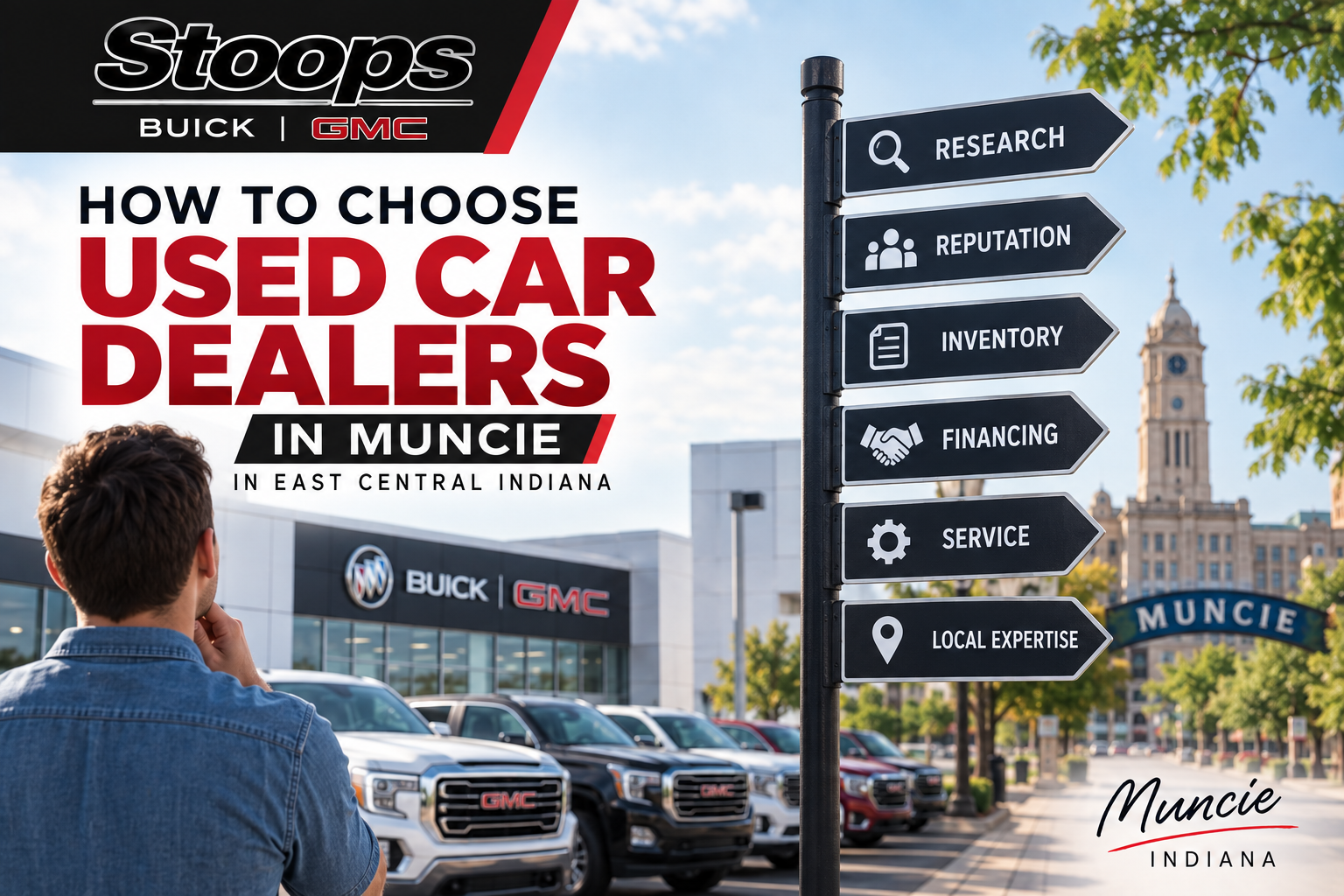
How to Choose Used Car Dealers in Muncie in East Central Indiana

How to Choose Used Car Dealers in Muncie in East Central Indiana

Dealerships like Stoops Buick GMC of Muncie, located in Muncie, IN, stand out through certified pre-owned options, vehicles under $20K, tailored financing, and models such as the GMC Terrain and Sierra 1500—prioritizing trust, quality inventory, and dedicated service for lasting customer confidence. Buyers across East Central Indiana benefit most when a dealership pairs a well-maintained lineup with straightforward paperwork, so every visit starts with clear expectations rather than surprises. That combination of dependable vehicles, honest pricing, and attentive service is what separates a dealership worth returning to from one that only sees a single transaction.


Choosing a used car dealer near you in Muncie that shoppers can rely on requires checking ten key factors: vehicle availability, transparent pricing and fees, written financing terms, separate trade-in valuation, vehicle history disclosure, meaningful test drives, clear warranty explanations, dependable service support, consistent customer reviews, and no-pressure timelines. Stoops Buick GMC of Muncie meets these standards for Muncie, Anderson, New Castle, and Marion buyers seeking trusted pre-owned vehicles throughout East Central Indiana.


What should you look for in a used car dealer?

A reliable used car dealer confirms vehicle availability and explains the full price and fees before any paperwork begins. Shoppers in East Central Indiana who skip these checks risk unexpected costs and wasted time. Without upfront pricing, a buyer might discover dealer fees or add-ons only at the signing table, turning a fair deal into a frustrating experience.


Beyond pricing, a dependable dealer sets clear expectations from the first phone call or website inquiry. That means confirming the exact trim, mileage, and options on a specific vehicle before a customer drives across town, and being upfront about whether financing pre-approval is available. When a dealership communicates clearly at every step, buyers spend less time chasing details and more time deciding whether the vehicle actually fits their needs.


How does a dealership prove vehicle history and condition?

The dealership should disclose vehicle-history reports and condition information freely. A trustworthy dealer also allows a meaningful test drive so customers can evaluate the car firsthand. Skipping these steps leaves buyers guessing about past accidents or mechanical issues. Checking car dealership reviews East Central Indiana shoppers have left over time is another reliable way to confirm a dealer follows through on these disclosures consistently, not just for a single sale.


What separates a customer-focused dealer from the rest?

Stoops Buick GMC of Muncie built its reputation on delivering exceptional customer experiences from day one. The dealership offers a wide selection of vehicles, including new and used inventory, shoppable by type or budget. Customers can browse options without pressure and review documents at their own pace.


Key checks when evaluating used car dealers near Muncie:

  • Confirm the specific vehicle is on the lot before visiting

  • Request the full out-the-door price, including all fees

  • Ask for financing terms in writing before signing

  • Separate the trade-in value discussion from the purchase price

  • Review vehicle history and condition reports before the test drive

Ten Checks for Choosing a Used Car Dealer

Use this quick-reference table to compare the ten key checks every buyer should make before choosing a used car dealership in East Central Indiana.


Check

What to Confirm

Why It Matters

Vehicle Availability

The exact vehicle is on the lot before you visit

Avoids wasted trips and bait-and-switch tactics

Transparent Pricing

Full out-the-door price, including all fees

Prevents surprise costs at signing

Financing Terms

Loan terms provided in writing before signing

Ensures rates and payments match what was promised

Trade-In Valuation

Trade-in value discussed separately from purchase price

Keeps both numbers fair and easy to compare

Vehicle History

Accident and condition reports disclosed upfront

Confirms the car's real condition and past

Test Drive

A meaningful, unhurried test drive is offered

Lets buyers evaluate handling and comfort firsthand

Warranty Coverage

Warranty terms clearly explained

Avoids confusion about what repairs are covered

Service Support

Dependable service department available after the sale

Keeps the vehicle running well long-term

Customer Reviews

Consistent, positive reviews over time

Signals a dealership's reliability and reputation

No-Pressure Timeline

Buyer is given time to decide without pressure tactics

Leads to a decision the buyer feels confident about


How do you find used car dealers in Muncie, Indiana?

Shoppers in East Central Indiana can start finding a reliable used car dealer by visiting a local dealership in person. Stoops Buick GMC of Muncie operates at 4055 W Clara Ln, Muncie, IN, offering a wide selection of pre-owned vehicles. The dealership provides certified pre-owned options and a wide range of inventory, making budget-conscious shopping straightforward. Anyone interested in buying a used car can start with a lot of visits or an online inventory search before narrowing down a specific vehicle.


What should a buyer do before visiting a dealership?

Setting a budget is the cornerstone of buying a used car. Buyers should evaluate their finances to understand a comfortable down payment and monthly installment range. This calculation must include expenses like insurance, taxes, and maintenance. Stoops Buick GMC of Muncie offers financing options to help customers manage these costs effectively.


Steps for a Smooth Used Car Buying Experience


Follow these steps to make the used car buying process at a dealership like Stoops Buick GMC of Muncie straightforward from start to finish.

  1. Set a realistic budget that accounts for the down payment, monthly installment, insurance, taxes, and maintenance

  2. Research the specific make and model, including certified pre-owned options and vehicles under $20K

  3. Contact the dealership to confirm the vehicle is still available before making the trip

  4. Ask for financing options and pre-approval details to understand monthly payment estimates

  5. Review the vehicle-history report and condition disclosures before arriving

  6. Take a meaningful test drive to evaluate comfort, handling, and any warning signs

  7. Request the full out-the-door price in writing, including all fees, before signing anything

  8. Confirm warranty coverage and the dealership's service support for after the sale

What inventory can shoppers expect to find?


The dealership stocks a range of pre-owned cars, trucks, and SUVs suitable for East Central Indiana roads. Inventory includes:

  • Certified pre-owned vehicles with verified condition reports

  • Vehicles under $20K for tighter budgets

  • A mix of makes and models beyond just Buick and GMC


Shoppers can browse the lot or check online listings before arriving. The team follows the principles on which the dealership was founded, ensuring every customer receives clear information about available vehicles and pricing.


Why choose a local dealership for your used car?

Shoppers looking for trusted used car dealers near Muncie gain distinct advantages by choosing a local operation over an out-of-town chain. A nearby dealership provides a clear service path and consistent review patterns that give buyers peace of mind long after the sale closes. Without this local accountability, customers risk losing the ongoing support that makes vehicle ownership manageable. Local dealers also depend on repeat business and word-of-mouth referrals within the community, giving them a strong incentive to stand behind every vehicle they sell long after the paperwork is signed.


What makes a local dealership more trustworthy?

A local dealership like Stoops Buick GMC of Muncie follows founding principles that prioritize customer care above transaction volume. The team dedicates itself to delivering the highest level of service and care to every guest who walks through the door. This commitment means buyers receive transparent pricing, honest vehicle condition disclosures, and financing terms explained in plain language, rather than hidden fees or pressure tactics.


How does vehicle selection compare at a local dealer?

Local dealers stock vehicles suited to regional driving conditions. Stoops Buick GMC of Muncie offers a wide selection of models ready for any journey, from city streets to off-road trails. The lineup includes:

  • Buick models like the Envista, Encore GX, Envision, and Enclave

  • GMC models such as the Sierra 1500 and Terrain


Each vehicle undergoes quality checks before reaching the lot, so buyers avoid the risk of purchasing a car with undisclosed issues or a murky history. That risk grows when buying from distant sellers who cannot provide face-to-face follow-up if a question comes up after the sale. A local dealer, by contrast, is easy to reach for a follow-up question, a service appointment, or help understanding a warranty claim.


Frequently Asked Questions

What should I look for when choosing a used car dealer?

Look for confirmed vehicle availability, transparent out-the-door pricing, written financing terms, a separate trade-in valuation, full vehicle history disclosure, a meaningful test drive, a clearly explained warranty, dependable service support, consistent customer reviews, and a no-pressure buying timeline.


How do I know if a used car dealership is trustworthy?

A trustworthy dealership discloses vehicle history and condition reports freely, provides financing terms in writing, and lets you take your time deciding without pressure tactics. Consistent positive customer reviews over time are also a strong signal of reliability.


Is it better to buy a used car from a local dealership?

Yes, a local dealership like Stoops Buick GMC of Muncie offers a clear service path after the sale, easier face-to-face follow-up, and accountability built on repeat business and community reputation, which out-of-town sellers typically cannot match.


What questions should I ask a used car dealer before buying?

Ask whether the exact vehicle is still on the lot, what the full out-the-door price includes, whether financing terms can be provided in writing, and what the warranty covers. Also ask to see the vehicle history report before your test drive.


How much should I budget for a used car in Muncie, Indiana?

Your budget should include the down payment and monthly installment plus insurance, taxes, and maintenance costs. Stoops Buick GMC of Muncie offers financing options and vehicles under $20K to help buyers find a comfortable price range.


What is a certified pre-owned vehicle?

A certified pre-owned (CPO) vehicle has passed a detailed inspection and comes with a verified condition report, giving buyers added confidence in the car's history and mechanical reliability compared to a standard used vehicle. Shoppers looking at certified pre-owned GMC Buick Muncie inventory get that same added inspection and reporting standard on every qualifying vehicle.


Why is a vehicle history report important when buying a used car?

A vehicle history report reveals past accidents, title issues, and maintenance records, helping buyers avoid purchasing a car with undisclosed problems. A trustworthy dealer will share this report before you commit to a test drive.


Should I get pre-approved for financing before visiting a dealership?

Getting a sense of financing options in advance helps you understand your monthly payment range. Stoops Buick GMC of Muncie offers used vehicle financing Muncie buyers can rely on to help manage costs like insurance, taxes, and maintenance alongside the loan payment.


What used vehicle brands and models does Stoops Buick GMC of Muncie offer?

Stoops Buick GMC of Muncie offers Buick models like the Envista, Encore GX, Envision, and Enclave, along with GMC models such as the Sierra 1500 and Terrain, plus a wider mix of makes and models suited to East Central Indiana roads.


How do I avoid pressure tactics when buying a used car?

Choose a dealership that gives you time to review documents, financing terms, and vehicle history at your own pace. A dealer that rushes you toward signing without clear answers is a warning sign worth taking seriously.


Final Thoughts

Choosing a used car dealership in East Central Indiana comes down to finding a partner committed to your satisfaction and success on the road. The ten checks outlined above—confirming availability, insisting on transparent pricing, getting financing in writing, separating trade-in value from purchase price, reviewing vehicle history, taking a meaningful test drive, understanding the warranty, confirming service support, checking customer reviews, and avoiding pressure tactics—give any shopper a reliable framework for evaluating a dealership before committing.


Stoops Buick GMC of Muncie embodies that dedication through quality inventory, transparent financing, and genuine customer care. Whether you're seeking a reliable daily driver or a capable adventure companion, their team stands ready to match you with the right vehicle and support your journey ahead with confidence and expertise.



Recommended Posts

logo

Christmas Muncie Mama's Market

Christmas Muncie Mama's Market The holiday shopping season feels more meaningful when the gifts we choose support people in our own community. Christmas Muncie Mama's Market offers a wonderful opportunity to discover unique products, explore small businesses, and enjoy the festive atmosphere. Scheduled for November 14, 2026, at the Delaware County Fairgrounds, this indoor holiday market brings more than 105 curated vendors together across two buildings for a day of shopping and community connection. At Stoops Automotive, we love sharing events that celebrate the creativity and entrepreneurial spirit of Muncie. Whether you're searching for thoughtful holiday gifts, treating yourself to something special, or simply looking for a fun weekend outing, this market offers a great reason to shop locally. A Holiday Market Full Of Possibilities One of the most exciting things about Christmas Muncie Mama's Market is the opportunity to explore products from many different vendors in one location. Unlike traditional shopping trips, a curated market gives visitors a chance to discover businesses they may not have encountered before. Each vendor brings something different to the experience, making every visit an opportunity for discovery. Some shoppers may arrive with a holiday gift list, hoping to find something thoughtful for family members or friends. Others may prefer to browse and see what catches their attention. That flexibility makes the market enjoyable. There's no need to rush between stores or follow a complicated schedule. You can take your time, explore different displays, and appreciate the creativity behind the businesses participating. Why Shopping Small Matters Local businesses help shape the character of a community. Behind every small business is someone investing time, energy, and effort into building something meaningful. When shoppers support local vendors, they help encourage entrepreneurship and keep those businesses connected to their communities. A purchase from a small business can feel especially personal. You may get to meet the person behind the product, learn about their work, or hear what inspired them to start their business. These connections make shopping more than a transaction. They create opportunities for conversation and appreciation. At Stoops Automotive, we understand that strong communities depend on people supporting one another. Events like this remind us how much local businesses contribute to Muncie's personality and economic life. A Fun Outing Beyond The Shopping List Although the market is designed with holiday shoppers in mind, it can also become a memorable outing for friends and families. You might attend with someone who loves discovering new products or invite a friend who enjoys supporting independent businesses. Parents can use the visit as an opportunity to talk with children about thoughtful gift-giving and the importance of supporting local entrepreneurs. Even if you aren't planning to make many purchases, browsing the market can be enjoyable on its own. It's a chance to see what's available in the community, gather gift ideas, and welcome the holiday season without needing an elaborate plan. Plan A Comfortable Shopping Day The indoor setting makes this event especially appealing as November temperatures begin to drop. With more than 105 vendors spread across two buildings, comfortable shoes and a relaxed schedule will help you make the most of the experience. Admission is $4, and parking is free. Consider bringing reusable shopping bags and checking the organizer's updates before heading out. If you're meeting friends or family, choose a convenient meeting location and allow enough time to explore both buildings. It's also smart to think about how you'll transport your purchases. Keeping the vehicle organized before leaving home can make it easier to bring everything back comfortably. Before heading out, check your tires, lights, and windshield visibility. Late-fall weather can change quickly in Indiana, so preparing your vehicle is always a good habit. Why We're Sharing This At Stoops Automotive At Stoops Automotive, we know dependable transportation plays an important role in everyday life. A reliable vehicle helps people get to work, visit loved ones, complete errands, and participate in community activities. But some of the best drives aren't about responsibilities. They're about spending time together, discovering something new, or supporting local businesses. A trip to Christmas Muncie Mama's Market could lead to finding the perfect gift, meeting a talented entrepreneur, or enjoying a memorable afternoon with someone special. That's why we're happy to highlight events that bring the Muncie community together. Celebrating The People Behind Local Businesses Christmas Muncie Mama's Market reminds us that holiday shopping can also be an opportunity to celebrate creativity, hard work, and community connection. With so many vendors gathered in one place, visitors have a chance to support local entrepreneurship while preparing for the festive season. From all of us at Stoops Automotive, we're proud to spotlight events that strengthen the community we serve. We hope this November brings opportunities to shop thoughtfully, support local businesses, and create meaningful holiday memories close to home.

logo

Mileage vs. Age: Which Matters More When Buying a Used Car?

Mileage vs. Age: Which Matters More When Buying a Used Car? Mileage usually matters more for wear and tear, but age matters more for time-related issues like rubber, fluids, electronics, and rust. Top 3 Takeaways A lower-mileage car is not automatically the better buy if it has been sitting, poorly maintained, or stored outside. A newer high-mileage car can be a smart long-term bet if the miles are mostly highway miles and the service history is strong. The best used car is the one with the better maintenance history, cleaner inspection, and lower future repair risk. Mileage vs. Age: The Simple Answer When comparing two used cars, most shoppers look at mileage first. That makes sense because mileage tells you how much the vehicle has been driven. More miles usually means more use on the engine, transmission, suspension, brakes, tires, and interior. But age matters too. Even a low-mileage vehicle can have problems if it is older. Rubber parts dry out, batteries weaken, seals can leak, fluids break down, and technology can become outdated. So, which matters more? The better answer is this: mileage tells you how much the car has worked, while age tells you how long the car has been exposed to time, weather, and storage conditions. To make the best decision, you need to compare both together. Why Mileage Matters When Buying a Used Car Mileage is one of the easiest ways to estimate vehicle wear. A car with 40,000 miles has usually experienced less driving stress than a similar car with 140,000 miles. Every mile adds wear to moving parts. The engine runs, the transmission shifts, the suspension absorbs bumps, and the brakes slow the vehicle down. Over time, those systems need maintenance or replacement. Mileage can also affect resale value. Most buyers prefer lower-mileage vehicles, so a car with fewer miles may be easier to sell later. It may also qualify for better financing terms or extended protection options, depending on the vehicle and lender. However, mileage does not tell the whole story. A 100,000-mile car with regular oil changes and highway driving may be in better shape than a 50,000-mile car that was ignored, driven hard, or used mostly for short trips. Why Age Matters When Buying a Used Car Age matters because cars do not only wear out from driving. They also age while parked. Over time, fluids can absorb moisture or lose effectiveness. Tires can age even if they still have tread. Rubber belts, hoses, bushings, and seals can dry out or crack. Age can also affect electronics and comfort features. Screens, cameras, sensors, switches, and infotainment systems may become outdated or start to fail as the vehicle gets older. Rust is another big factor. A 10-year-old car from a snowy climate may have more corrosion than a 10-year-old car from a warmer area. Salt, humidity, and outdoor storage can all shorten a vehicle’s life. That is why an older car with low miles still needs a close inspection. Quick Comparison: Mileage vs. Age Factor Mileage Tells You Age Tells You Engine wear How much the engine has been used How long seals, gaskets, and fluids have aged Transmission wear How often the vehicle has shifted and driven Whether fluid and internal parts may be aging Suspension wear How many bumps and road miles it has handled Whether rubber bushings and mounts are drying out Tires How much tread may be used Whether tires are too old, even with tread left Technology How much use buttons and screens have had Whether features feel outdated Resale value Lower miles usually help value Newer model years usually help value Long-term reliability Depends on use and maintenance Depends on storage, climate, and maintenance The Best Way to Compare Two Cars A simple way to compare two used cars is to look at mileage, age, maintenance history, condition, and expected future repairs. For example, let’s say you are comparing these two vehicles: Vehicle Age Mileage First Impression Car A 8 years old 55,000 miles Older but low mileage Car B 4 years old 95,000 miles Newer but high mileage At first, Car A looks better because it has fewer miles. But that does not automatically make it the better long-term choice. Car A may have older tires, aging hoses, a weaker battery, outdated tech, and time-related wear. Car B may have more miles, but if those miles came from highway driving and the car has strong service records, it could still be the smarter buy. The right choice depends on the full picture. Use This Simple Scoring System When you are deciding between two cars, give each one a score from 1 to 5 in each category. Category What to Look For Score 1 Means Score 5 Means Mileage Total miles and miles per year Very high mileage for age Reasonable mileage for age Age Model year and time-related wear Older with aging parts Newer with less age-related risk Maintenance Service records and oil changes Little or no history Strong documented history Condition Exterior, interior, tires, brakes Rough or neglected Clean and well cared for Inspection Mechanic or dealer inspection Several concerns Passes cleanly Ownership Cost Tires, brakes, repairs, fuel Expensive soon Lower expected costs The car with the higher total score is usually the better long-term bet. This method helps you avoid picking a car based on mileage alone. What Is Considered Good Mileage for a Used Car? A common rule is that the average driver puts about 12,000 to 15,000 miles per year on a vehicle. That means a 5-year-old car with 60,000 to 75,000 miles is fairly normal. A car with much less mileage than average may look attractive, but you still need to ask why. Was it a weekend car? Was it sitting unused? Was it owned by someone who rarely drove? A car with higher mileage is not always bad either. If it was driven mostly on the highway, serviced on time, and inspected well, it may still have plenty of life left. Mileage should be judged against the vehicle’s age and condition. Miles Per Year Can Tell You a Lot Instead of only looking at the odometer, calculate miles per year. Use this simple formula: Total mileage divided by vehicle age equals average miles per year. Vehicle Age Mileage Average Miles Per Year What It May Mean 5 years 40,000 8,000 Low use 5 years 75,000 15,000 Average use 5 years 110,000 22,000 Heavy use 10 years 70,000 7,000 Low use, inspect for age-related issues 10 years 150,000 15,000 Average use for age A very low miles-per-year number can be good, but it can also mean the car sat for long periods. A very high miles-per-year number may be acceptable if the car has excellent records and mostly highway miles. Highway Miles vs. City Miles Not all miles are equal. Highway miles are usually easier on a vehicle. The engine runs at steady speeds, the transmission shifts less, and the brakes are used less often. City miles are harder. Stop-and-go traffic creates more braking, more shifting, more idling, and more heat. Short trips can also be tough because the engine may not fully warm up. That is why a higher-mileage highway car can sometimes be a better buy than a lower-mileage city car. When possible, ask how the vehicle was driven. You may not always get a perfect answer, but service records, tire wear, brake condition, and overall cleanliness can offer clues. When a Low-Mileage Older Car Makes Sense A low-mileage older car can be a great buy if it was maintained well and stored properly. It may be a good choice if the tires are not too old, the fluids have been changed, the battery is healthy, and the inspection looks clean. It also helps if the vehicle was garage-kept or driven regularly enough to keep systems working. Low mileage is especially helpful on vehicles known for long-term reliability. If the model has a good reputation and the condition checks out, an older low-mileage car can offer strong value. Just do not skip the inspection because of the low odometer reading. When a Newer High-Mileage Car Makes Sense A newer high-mileage car can also be a smart choice. This is especially true if the miles came from commuting or highway driving. A newer car may have better safety features, newer technology, improved fuel economy, and fewer age-related issues. It may also have parts that are easier to find and systems that feel more modern. In some cases, a newer high-mileage car can feel tighter, cleaner, and more dependable than an older low-mileage car. The key is service history. If the car has had regular oil changes, fluid services, tires, brakes, and inspections, high mileage does not have to be a dealbreaker. Red Flags to Watch For Mileage and age matter, but warning signs matter more. Be cautious if the vehicle has no service records, mismatched tires, warning lights, rough shifting, leaks, rust, smoke, strange noises, or heavy interior wear. These can point to neglect or upcoming repairs. Also watch for mileage that seems too low for the condition. If a car has low mileage but the seats, pedals, steering wheel, and buttons are heavily worn, ask more questions. A vehicle history report can help, but it should not replace a hands-on inspection. Maintenance History Can Beat Mileage and Age A well-maintained car usually beats a neglected car, even if it has more miles or is older. Oil changes, transmission services, coolant flushes, brake work, tire rotations, and regular inspections all make a difference. A car that has been cared for is often a safer long-term bet than one that simply looks good on paper. This is why maintenance history should carry a lot of weight in your decision. If one car has records and the other does not, the car with records may deserve the edge. Documentation gives you confidence. Guessing creates risk. Which One Is the Better Long-Term Bet? The better long-term bet is usually the car with the best balance of mileage, age, maintenance, condition, and price. If two cars are similar in price, choose the one with better service history and fewer upcoming repairs. If one has lower miles but needs tires, brakes, fluids, and a battery, the savings may disappear quickly. If one is newer but has more miles, look closely at how it was maintained. Newer vehicles with highway miles can still be excellent buys when they have been serviced properly. The best car is not always the lowest-mileage car. It is the one most likely to stay reliable without surprising you with major repair costs. Quick Decision Guide Situation Better Choice Older car with low miles but no records Be careful Newer car with high miles and strong records Worth serious consideration Low-mileage car with old tires and dry rubber parts Inspect closely High-mileage car with highway use and regular service Could be a smart buy Two similar cars, one has better maintenance records Choose the documented one Two similar cars, one has major warning lights Avoid or inspect before buying Final Buying Tip Before choosing between mileage and age, think about what you need from the car. If you want the lowest possible monthly payment, an older low-mileage vehicle may be appealing. If you want newer safety features and updated technology, a newer high-mileage vehicle may make more sense. For long-term ownership, focus on condition and maintenance first. Mileage and age should guide your decision, not make the decision for you. A clean inspection, solid service history, fair price, and comfortable test drive are the strongest signs that you are making a smart choice. At Stoops Buick GMC of Muncie, we can help you compare used vehicles side by side and choose the one that makes the most sense for your budget, driving habits, and long-term goals. Start by browsing our new and used vehicle inventory, then get one step closer to your next car by filling out our secure credit application. Frequently Asked Questions About Mileage vs. Age Is mileage or age more important when buying a used car? Mileage is usually more important for mechanical wear, but age is important for parts that break down over time. The best choice depends on maintenance history, condition, and how the vehicle was driven. Is an older car with low mileage a good buy? It can be a good buy if it was maintained properly and stored well. Still, you should inspect the tires, battery, belts, hoses, fluids, seals, and electronics before deciding. Is a newer car with high mileage bad? Not always. A newer high-mileage car can be a smart purchase if the miles were mostly highway miles and the service history is strong. How many miles per year is normal for a used car? A common average is about 12,000 to 15,000 miles per year. A vehicle far above or below that range should be inspected closely, so you understand how it was used. What mileage is too high for a used car? There is no single mileage number that makes a car too high. A well-maintained vehicle with 120,000 miles may be better than a neglected one with 70,000 miles. What should I check before buying a used car? Check the service history, tires, brakes, fluids, warning lights, rust, leaks, test drive feel, and overall condition. A professional inspection is one of the best ways to reduce risk before buying.

logo

What Are the Best Used SUVs for Road Trips?

The best used SUVs for road trips are comfortable, spacious, fuel-efficient, and reliable enough to handle long drives with confidence. Top 3 Takeaways The best road trip SUVs give you a smooth ride, supportive seats, easy-to-use tech, and enough room for passengers and luggage. Toyota, Honda, Subaru, and Mazda SUVs are strong used options because many models have solid reputations for reliability, resale value, and everyday practicality. The right SUV depends on your trip style: compact SUVs are great for fuel savings, midsize SUVs are best for families, and larger SUVs are ideal for towing or extra cargo. Why Does the Right SUV Matter for Road Trips? A great road trip vehicle should make long hours behind the wheel feel easier. That means comfortable seating, quiet highway manners, good visibility, and enough space for everyone to stretch out. It should also have room for luggage, coolers, sports gear, strollers, pet supplies, or whatever else your trip requires. Cargo space matters even more when you are traveling with family or friends. Reliability is just as important as comfort. Road trips often mean higher mileage, long highway stretches, changing weather, and unfamiliar roads. That is why many shoppers look for used SUVs with proven track records. Sources like J.D. Power, Consumer Reports, IIHS, Kelley Blue Book, and iSeeCars regularly evaluate dependability, safety, resale value, and long-term ownership trends. Best Used SUVs for Road Trips at a Glance SUV Best For Why It Works for Road Trips Toyota Highlander Families and long-distance comfort Smooth ride, three-row seating, strong reliability reputation Honda Pilot Families needing more space Roomy cabin, practical storage, comfortable highway ride Honda CR-V Small families and couples Great cargo room, easy driving, strong fuel economy Toyota RAV4 Everyday driving and weekend trips Reliable, efficient, versatile, available AWD Subaru Outback Adventure road trips Standard AWD, wagon-like cargo room, comfortable ride Mazda CX-5 Drivers who want comfort and style Upscale cabin feel, fun handling, manageable size Toyota 4Runner Outdoor trips and rougher roads Rugged build, off-road ability, strong longevity reputation Chevrolet Tahoe Big families and towing Large cargo area, powerful engine options, highway presence Toyota Highlander: Best Overall Used SUV for Family Road Trips The Toyota Highlander is one of the best used SUVs for road trips because it balances comfort, reliability, and family-friendly space. It gives you three rows without feeling too oversized for daily driving. The Highlander is a smart choice for families who need room for kids, luggage, and weekend gear. It is also known for a quiet ride and easy-to-use controls. Used Highlander Hybrid models can be especially appealing if you want better fuel economy on long drives. Hybrid versions may cost more upfront, but they can save money over time if you drive often. The Highlander is also a strong fit for shoppers who care about long-term ownership. Toyota SUVs perform well in several longevity and resale value studies, and the Highlander Hybrid has been recognized among vehicles with strong odds of reaching very high mileage. Honda Pilot: Best Used SUV for Passenger Space The Honda Pilot is a strong road trip SUV for families who need more passenger room than a compact SUV can offer. It has a practical cabin layout, wide seats, and a third row that works well for kids or occasional adult passengers. The Pilot is especially useful when your road trips include sports equipment, beach gear, camping supplies, or extra bags. It offers the kind of flexible interior that makes packing easier. Another reason shoppers like the Pilot is its relaxed driving feel. It is not trying to be flashy, but it is comfortable, predictable, and easy to live with. For buyers who want a used three-row SUV without jumping into a full-size model, the Honda Pilot is one of the easiest recommendations. It offers a good mix of space, dependability, and family-focused features. Honda CR-V: Best Compact Used SUV for Road Trips The Honda CR-V is one of the best compact SUVs for road trips because it makes excellent use of its size. It is easy to park, easy to drive, and still offers impressive cargo space for a compact SUV. Kelley Blue Book notes that the Honda CR-V has long been known for practicality, reliability, and easy driving manners. It also highlights the CR-V’s roomy cargo area, which is a big benefit for road trips. The CR-V is a great match for couples, small families, college students, commuters, and anyone who wants one vehicle for both daily use and weekend travel. It is comfortable enough for longer drives without feeling bulky around town. Used CR-V Hybrid models are also worth considering. They can offer better fuel efficiency while keeping the same practical layout that makes the CR-V so popular. Toyota RAV4: Best Used SUV for Everyday Trips and Weekend Getaways The Toyota RAV4 is another excellent used SUV for road trips. It is reliable, efficient, and available in many trims, so shoppers can usually find one that fits their budget. The RAV4 is a good choice if you want an SUV that can handle work commutes during the week and longer drives on the weekend. It has enough space for luggage and passengers without feeling too large. All-wheel drive versions are helpful for drivers who travel through rain, snow, gravel roads, or mountain areas. Hybrid versions are also popular for drivers who want better mileage on longer trips. Kelley Blue Book describes the CR-V and RAV4 as compact SUV benchmarks with strong reputations for reliability, resale value, and practicality. That makes both models smart choices for used SUV shoppers. Subaru Outback: Best Used SUV Alternative for Adventure Trips The Subaru Outback is technically more of a wagon-style crossover, but many shoppers compare it directly with SUVs. It is a great road trip choice because it offers standard all-wheel drive, a comfortable cabin, and a long cargo area. The Outback is ideal for camping trips, mountain drives, hiking weekends, and dog-friendly travel. Its lower roofline also makes it easier to load roof racks, bikes, kayaks, or cargo boxes compared with taller SUVs. Drivers like the Outback because it feels stable and confident on the highway. It also has good ground clearance for rougher roads, depending on the model year and trim. For shoppers who want SUV practicality without a bulky feel, the Subaru Outback is a very strong used option. Mazda CX-5: Best Used SUV for Comfort and Driving Feel The Mazda CX-5 is a great road trip SUV for drivers who want something comfortable, stylish, and fun to drive. It has a more premium cabin feel than many compact SUVs in its price range. The CX-5 is especially appealing if you care about seat comfort, interior quality, and a quieter ride. It feels more refined than many shoppers expect from a used compact SUV. It is not the biggest SUV in the class, so it may not be the best choice for large families or heavy packers. However, it works very well for couples, solo travelers, and small families. The CX-5 also has responsive steering and a confident highway feel. That can make long drives more enjoyable, especially if your road trip includes scenic back roads. Toyota 4Runner: Best Used SUV for Outdoor Road Trips The Toyota 4Runner is one of the best used SUVs for road trips that include camping, trails, dirt roads, or outdoor adventures. It is more rugged than most crossovers and has a strong reputation for durability. The 4Runner is not the most fuel-efficient SUV, and its ride can feel truck-like compared with a Highlander or CR-V. However, it makes up for that with toughness and capability. It is a smart choice for drivers who care more about adventure than maximum comfort. If your road trips include national parks, boat ramps, hunting land, or mountain cabins, the 4Runner makes a lot of sense. Toyota 4Runner models also perform well in longevity and resale value research, which is one reason used 4Runners often hold their value. Chevrolet Tahoe: Best Used SUV for Big Families and Towing The Chevrolet Tahoe is a strong choice for road trips when you need serious space. It is a full-size SUV with three rows, a large cargo area, and strong towing ability. The Tahoe is ideal for large families, road trips with pets, boat owners, and anyone who packs heavy. It also feels stable and confident on long highway drives. The tradeoff is fuel economy and size. A Tahoe will usually cost more to fuel than a compact or midsize SUV, and it takes more room to park. Still, if comfort and cargo space are your top priorities, a used Tahoe can be a great open-road vehicle. It is built for drivers who need more than a typical crossover can offer. Compact vs. Midsize vs. Full-Size SUVs for Road Trips Choosing the right SUV size depends on how you travel. Bigger is not always better, especially if you care about fuel economy and easy parking. SUV Size Best For Pros Cons Compact SUV Couples, commuters, small families Better fuel economy, lower cost, easy parking Less third-row or towing capability Midsize SUV Families, longer vacations More passenger space, smoother ride, flexible cargo room Higher price and fuel cost than compact SUVs Full-Size SUV Large families, towing, heavy cargo Maximum space, strong engines, road presence Higher fuel cost, harder to park, higher ownership costs A compact SUV like the Honda CR-V, Toyota RAV4, or Mazda CX-5 is best if you want efficiency and everyday convenience. These SUVs are easy to live with and still handle most road trips well. A midsize SUV like the Toyota Highlander or Honda Pilot is better if you travel with kids or need a third row. These models give you more space without going all the way to a full-size SUV. A full-size SUV like the Chevrolet Tahoe is best when you need towing power, maximum cargo space, or room for a larger group. It is overkill for some drivers, but perfect for others. What Features Should You Look for in a Used Road Trip SUV? The best used road trip SUVs usually have a few key features in common. Comfort, safety, and convenience should matter just as much as horsepower. Look for supportive front seats, rear-seat air vents, USB ports, Apple CarPlay, Android Auto, adaptive cruise control, blind spot monitoring, and lane-keeping assistance. These features can make long drives easier and safer. Cargo features are also important. A power liftgate, folding rear seats, roof rails, underfloor storage, and a flat cargo floor can all make packing simpler. Before buying, check the vehicle history report, maintenance records, tire condition, brake condition, and recall status. A great model is only a great buy if the specific vehicle has been cared for properly. Road Trip SUV Buying Checklist What to Check Why It Matters Seat comfort You will notice uncomfortable seats quickly on long drives Cargo space Luggage, coolers, strollers, and gear can fill up fast Fuel economy Better MPG can save real money on longer trips Tire condition Worn tires can affect safety, comfort, and road noise Maintenance history Regular service is key for reliability Safety features Driver assistance tech can reduce stress on highways Infotainment system Navigation and phone integration make travel easier AWD or 4WD Helpful for snow, rain, gravel, and outdoor trips Cabin noise A quieter cabin makes long drives less tiring Third-row space Important if adults or teens will ride in the back Which Used SUV Is Best for Your Road Trip Style? If you want the safest all-around pick, start with the Toyota Highlander or Honda Pilot. Both are practical, comfortable, and family-friendly. If you want the best balance of fuel economy and cargo space, look at the Honda CR-V or Toyota RAV4. These are ideal for most everyday drivers. If your trips involve camping, pets, snow, or dirt roads, the Subaru Outback is a great choice. It feels ready for adventure without being too big. If you want something more upscale without jumping into luxury SUV pricing, the Mazda CX-5 is worth a test drive. It has a comfortable interior and a more premium feel. If your road trips involve trails, towing, or serious outdoor use, consider the Toyota 4Runner or Chevrolet Tahoe. These SUVs are not the cheapest to fuel, but they are built for bigger jobs. Final Thoughts: What Is the Best Used SUV for Road Trips? The best used SUV for road trips depends on your passengers, cargo needs, budget, and driving style. For most shoppers, the Toyota Highlander, Honda Pilot, Honda CR-V, Toyota RAV4, Subaru Outback, and Mazda CX-5 are some of the strongest places to start. The key is to choose an SUV that feels comfortable during the test drive and has the space you need in real life. Do not just shop by looks or monthly payment. A great road trip SUV should make travel feel easier from the driveway to the destination. When the right SUV fits your lifestyle, even a long drive can feel like part of the vacation. Ready to find a used SUV that is built for your next road trip? Visit Stoops Auto to browse our current new and used inventory or get started today with our secure credit application. Frequently Asked Questions About the Best Used SUVs for Road Trips What is the best used SUV for long road trips? The Toyota Highlander is one of the best used SUVs for long road trips because it offers a smooth ride, flexible seating, strong reliability, and good family comfort. The Honda Pilot is another excellent choice if you need more passenger space. What used SUV has the most comfortable ride? The Toyota Highlander, Honda Pilot, Mazda CX-5, and Subaru Outback are all known for comfortable highway driving. The best one for you depends on whether you want three rows, better fuel economy, or a smaller SUV that is easier to park. What is the most reliable used SUV for road trips? The Toyota RAV4, Honda CR-V, Toyota Highlander, and Toyota 4Runner are commonly recommended for shoppers who care about long-term reliability. Maintenance history still matters, so always inspect the specific SUV before buying. Is a compact SUV big enough for a road trip? Yes, a compact SUV can be big enough for a road trip if you are traveling with one to four people and packing reasonably. Models like the Honda CR-V, Toyota RAV4, and Mazda CX-5 offer useful cargo space while staying fuel-efficient and easy to drive. Should I buy an AWD SUV for road trips? An AWD SUV is a good idea if your road trips include snow, heavy rain, mountains, gravel roads, or outdoor destinations. If you mostly drive on highways in mild weather, front-wheel drive may be more affordable and fuel-efficient. What should I check before taking a used SUV on a road trip? Before a road trip, check the tires, brakes, oil, coolant, battery, lights, wipers, and spare tire or repair kit. You should also make sure your registration, insurance, roadside assistance, and navigation setup are ready before you leave.