


If you are searching for used cars in East Central Indiana, this comprehensive, step-by-step checklist covers every single detail of how to inspect pre-owned vehicles with confidence and clarity. Buying a pre-owned vehicle can be an exciting milestone, but without a clear playbook, it can easily turn into a stressful ordeal. This guide serves as your practical roadmap for evaluating dependable options that local drivers can rely on for years to come. The experts at Stoops Buick GMC of Muncie recommend systematically verifying each item on this list
before signing any purchase agreement or handing over your hard-earned cash.
Car shoppers throughout Muncie, Yorktown, Anderson, New Castle, and the surrounding East Central Indiana communities all face the exact same fundamental challenge: separating a truly dependable, well-maintained vehicle from one that merely looks shiny on the dealership lot while hiding costly, deep-seated mechanical issues beneath the hood. Working through this comprehensive checklist step-by-step allows you to negotiate from a position of authority and knowledge, ensuring you avoid post-purchase regret. Whether you are hunting for an ultra-budget-friendly daily commuter car for trips down McGalliard Road, a spacious family SUV for weekend road trips, or a certified pre-owned model with factory warranty coverage, these core inspection principles apply every single time.
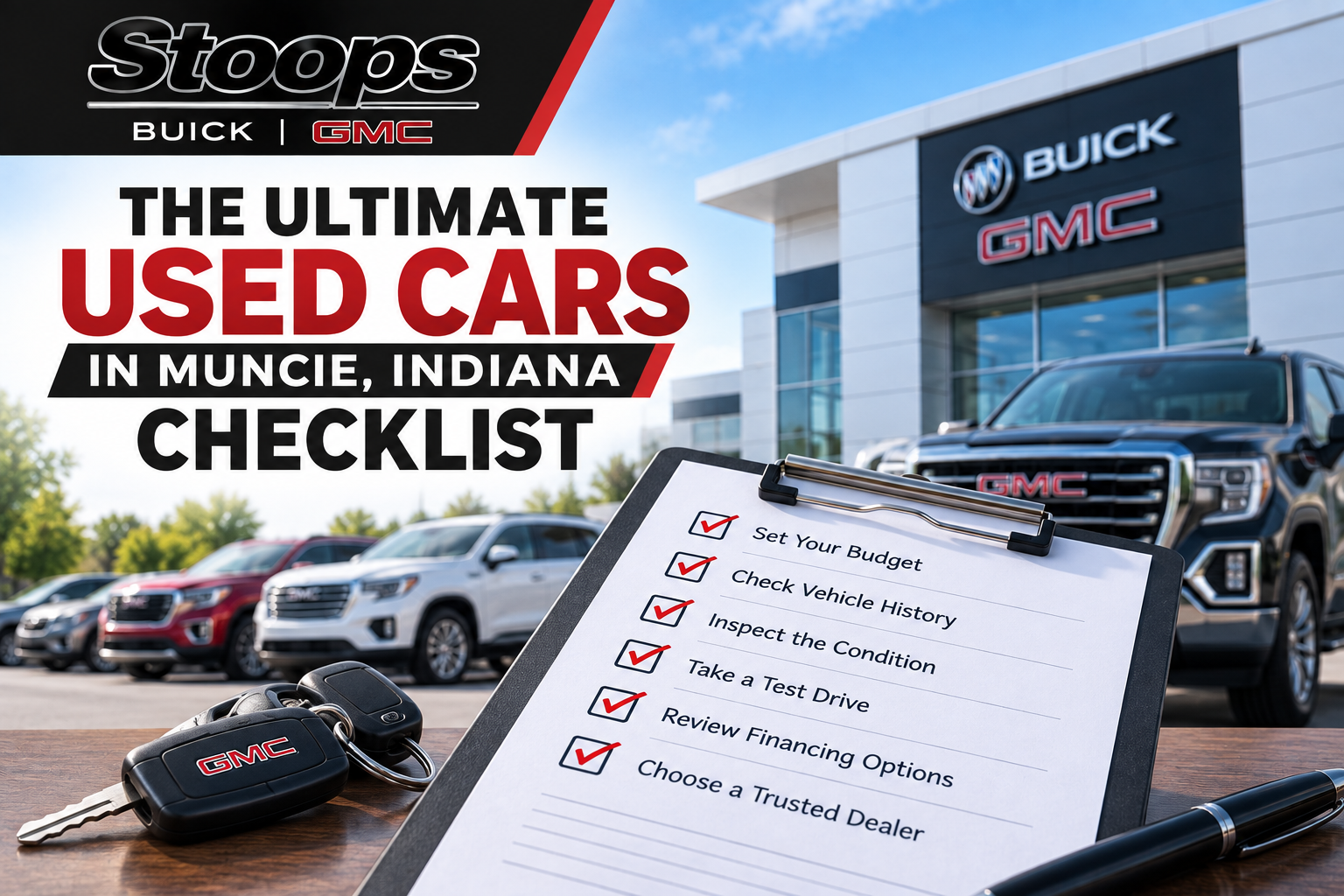
Quick-Reference Used Car Checklist
Before you even step foot onto a car lot or meet up with a private seller in Muncie, print or save this quick-reference checklist. It highlights the ten non-negotiable inspection essentials every smart buyer should confirm before making an offer:
Vehicle History Report: Always run a comprehensive report (such as CARFAX or AutoCheck) using the Vehicle Identification Number (VIN) to check for reported accidents, title branding, service records, and previous ownership history.
Odometer Verification: Cross-reference the mileage displayed on the digital or analog odometer with state BMV records, oil change stickers, and maintenance logs to spot potential rollback fraud.
Title Status & Paperwork: Physically inspect the title to confirm it is clean and clear, ensuring it does not carry salvage, rebuilt, lemon-law buyback, or flood damage designations.
Exterior Body & Frame Integrity: Methodically inspect the sheet metal for rust spots, paint overspray, mismatched body panels, misaligned seams, or hidden structural frame damage.
Interior Condition & Electronics: Check upholstery for tears or dampness, sniff for mildew or smoke odors, and press every button to confirm power windows, AC, heating, and infotainment systems work perfectly.
Tire Condition & Tread Depth: Measure the tread depth on all four tires using a tread gauge or penny test, looking closely for uneven wear patterns that indicate severe alignment or suspension problems.
Engine Cold Start & Health: Pop the hood and insist on starting the engine completely cold, paying close attention to any startup rattle, metallic knocking, rough idle, or heavy exhaust emissions.
Fluid Quality & Leak Checks: Pull the dipsticks and inspect engine oil, transmission fluid, brake fluid, power steering fluid, and coolant for correct levels, proper color, and signs of contamination.
Dashboard Warning Indicators: Turn the key to ignition mode to verify all warning lights bulb-check, then ensure the Check Engine light, ABS, and airbag symbols turn off completely once running.
Road Test & Professional Inspection: Execute a thorough, multi-surface test drive that tests highway acceleration and hard braking, then top it off with a pre-purchase evaluation by an independent certified mechanic.
Inspecting the History & Exterior
What should I check before buying a used car?
A thorough, stress-free pre-purchase inspection always starts long before you turn the ignition key. Your first step should always be requesting or purchasing a comprehensive vehicle history report using the 17-digit Vehicle Identification Number (VIN). Services like CARFAX or AutoCheck provide invaluable insight into a car's lifetime story. This document logs odometer readings over time, recorded accidents, structural or frame damage declarations, airbag deployments, total number of previous owners, service and maintenance records, and commercial usage history (such as rental fleets or taxi service).
Skipping this essential background research exposes you to massive unnecessary risk. A car might shine like new after a quick detail, but a vehicle history report can reveal undisclosed flood damage, insurance total-loss payouts, or a salvage title. Purchasing a vehicle with a branded title can make it nearly impossible to secure traditional auto financing or comprehensive auto insurance in Indiana. Furthermore, salvage and rebuilt vehicles carry drastically diminished resale values and frequently harbor concealed safety hazards that compromise occupant protection in a crash.
How does exterior condition affect a used car's value?
When evaluating a pre-owned vehicle in person, set aside plenty of time to inspect every exterior body panel in bright, natural daylight. Avoid viewing vehicles in the dark, during heavy rain, or under low-light showroom lamps, as these environments can easily mask severe body imperfections, scratches, and subtle paint discrepancies.
Begin your exterior walkaround by examining the body lines and panel gaps along the hood, doors, trunk lid, and front fenders. On a factory-fresh vehicle, these gaps are uniform, straight, and tight. If you notice wide, uneven gaps on one side of the hood while the opposite side touches the fender, or if a door requires extra force to latch shut, the car has likely suffered structural shift or poor body repairs following a collision. Sight down the length of each side panel from a low angle to look for subtle door dings, waves in the sheet metal, or ripples that indicate body filler (Bondo) was used to smooth over bent metal. You can perform a quick magnet test along the lower door panels, rocker panels, and wheel wells—if a soft refrigerator magnet fails to stick to a steel panel, it means a heavy layer of plastic filler is hiding damage underneath.
Pay extra close attention to paint quality. Look for differences in gloss, texture, or color tone between adjacent panels. Check rubber window seals, door handles, and trim pieces for fine lines of paint overspray, which prove that a panel was repainted outside of the factory setting. While minor cosmetic touch-ups for stone chips are normal, full-panel repaints raise fair questions about past accidents.
In East Central Indiana, rust is the single biggest enemy of pre-owned vehicles. Cold Midwest winters bring heavy snowfall, freezing temperatures, and relentless applications of road salt and chemical de-icers that aggressively corrode automotive steel. Inspect the lower edges of all four doors, the inner lip of the wheel arches, the tailgate or trunk seam, and the rocker panels under the doors. Minor surface rust on untreated exhaust components is expected, but deep, flaking rust or rust holes on structural frame rails, subframes, and suspension mounting points are massive red flags. Structural corrosion compromises vehicle crash safety and can lead to catastrophic suspension failure while driving at highway speeds on Interstate 69.
Mechanical Inspection & Diagnostic Checks
How do I inspect a used car to avoid costly repairs?
While a shiny exterior is nice, a vehicle's true value lies under the hood and beneath the chassis. Uncovering hidden mechanical flaws before you complete a purchase gives you powerful negotiation leverage or the wisdom to walk away from a money pit. Performing a comprehensive mechanical check requires no specialized tools—just a keen eye, a flashlight, a paper towel, and your senses of smell and hearing.
What mechanical checks should every buyer perform?
Before starting the engine, open the hood and conduct a detailed visual check of the engine bay. Look for signs of active oil leaks, dried fluid stains, or heavy layers of greasy grime caked around valve covers, oil pans, and timing belt covers. Inspect rubber serpentine belts for cracking, fraying, or missing ribs, and squeeze radiator hoses to ensure they feel firm yet flexible rather than rock-hard, brittle, or squishy. Check the battery terminals for fuzzy white or green corrosion buildup, which signals electrical neglect. Next, pull the dipsticks and remove oil and coolant caps to evaluate fluid health across six vital components:
Engine Oil & Valve Train: Pull the oil dipstick and wipe it on a clean white paper towel. Healthy engine oil ranges from golden amber to dark brown. If the oil is pitch black and thick as sludge, routine maintenance was neglected. If you observe a creamy, chocolate-milk-like appearance or droplets of water on the dipstick or under the oil filler cap, coolant is mixing with the oil—a classic symptom of a cracked engine block or blown head gasket.
Automatic Transmission Fluid: On vehicles equipped with a transmission dipstick, check the fluid level with the engine idling at operating temperature. Fresh transmission fluid is translucent red or pink. Dark brown or burnt-smelling fluid indicates severe internal clutch wear and overheating, which often precedes total transmission failure.
Cooling System & Radiator: Never open a hot radiator cap! On a cold engine, inspect the coolant overflow reservoir. Coolant should be bright green, orange, yellow, or pink depending on the manufacturer. Oily residue floating on top or rust particles floating in the reservoir signal cooling system corrosion or head gasket leaks.
Brake & Power Steering Fluids: Inspect the brake fluid reservoir located near the firewall; the fluid should be clear with a light amber hue. Dark, murky brake fluid contains moisture that lowers boiling points and corrodes internal brake calipers. Check power steering fluid levels to prevent pump whine.
Exhaust System & Emissions: With the engine running, peek underneath to inspect the exhaust pipes, muffler, and catalytic converter. Excessive rattling at idle often points to loose heat shields or a broken internal ceramic core in the catalytic converter. Observe the tailpipe exhaust output: black smoke indicates excessive fuel consumption, blue smoke indicates burning oil, and dense white smoke indicates coolant leaking into the combustion chambers.
Should a buyer take the vehicle to an independent mechanic?
Absolutely, without exception! Even if you consider yourself mechanically savvy, investing in a professional Pre-Purchase Inspection (PPI) by a trusted independent mechanic or a certified service center like Stoops Buick GMC of Muncie is the single best financial protection you can buy during the car-shopping process. A professional inspection typically costs between $100 and $200—a tiny fraction of the thousands of dollars you could lose if you inadvertently purchase a car with hidden defects.
A certified technician puts the vehicle up on a hydraulic lift, giving them full visual access to underbody components that are impossible to inspect properly while standing in a parking lot. They will test suspension ball joints, wheel bearings, tie rods, CV axle boots, brake pad thickness, rotor condition, and frame squareness. Furthermore, mechanics use advanced diagnostic scan tools to plug directly into the vehicle's On-Board Diagnostics (OBD-II) port. These tools read stored fault codes and check system readiness monitors, uncovering hidden issues even if someone cleared the dashboard Check Engine light right before you arrived.
Reputable dealerships and honest private sellers will happily allow you to take the vehicle to an independent shop for a pre-purchase inspection. If a seller flatly refuses to permit an independent inspection or tries to pressure you into closing the deal immediately, consider that a major warning sign and walk away from the transaction.
Mastering the Test Drive
The test drive is the ultimate real-world test of any pre-owned vehicle. While static inspections reveal cosmetic flaws and static fluid conditions, taking the vehicle out on the open road reveals how all mechanical systems operate together under real-world stress. Approach the test drive with an analytical, objective mindset—leave the radio turned off and focus entirely on the vehicle's driving dynamics.
How should a buyer prepare before the test drive?
Smart test drive preparation starts with setting a firm budget that accounts for the complete cost of ownership. Beyond the advertised sticker price, remember to factor in Indiana state sales tax (7%), county registration and BMV titling fees, comprehensive auto insurance premiums, and an initial maintenance buffer for wear items like tires or brakes. The finance team at Stoops Buick GMC of Muncie can assist in outlining clear pre-drive budget projections so you know exactly what monthly payments fit your lifestyle.
Pack a small inspection kit for your test drive: bring an LED flashlight, a tire tread depth gauge or penny, a small notebook, and a smartphone to record vehicle details or take pictures of VIN plates and tire date codes. Bringing along a knowledgeable friend or family member—an extra pair of eyes and ears is invaluable for spotting paint defects, listening for exterior clunks while turning, or providing an unbiased second opinion when emotions run high.
Always schedule test drive appointments during daylight hours so you can clearly see body lines and interior wear. Plan out a test route in advance that includes a good variety of road surfaces: local stop-and-go city traffic along Tillotson Avenue, rough pavement or railroad crossings to evaluate suspension damping, and open highway stretches along SR 67 or I-69 to evaluate high-speed stability, cabin noise, and passing power.
What should the test drive cover?
Inspect the Exterior: Walk around the vehicle, checking panel gaps, paint consistency, and tire tread depth.
Examine the Interior: Test every seat adjustment, window, lock, and climate control setting.
Start the Engine Cold: Listen for unusual noises and watch for warning lights on the dashboard.
Drive Varied Roads: Include city streets, highway speeds, and rougher surfaces to evaluate suspension response.
Test Braking and Steering: Apply firm pressure at moderate speed and check for pulling or vibration.
Park and Reverse: Verify visibility, backup camera function, and transmission behavior in tight spaces.
Plan for a comprehensive test drive that lasts at least 20 to 30 minutes. Never accept a quick 5-minute trip around the block! Many intermittent engine misfires, transmission slip issues, and cooling system overheating problems only manifest after the vehicle reaches full operating temperature during extended driving.
Frequently Asked Questions
What is the best way to check if a used car has been in an accident?
The most reliable method combines digital history verification with a careful physical inspection. First, pull a CARFAX or AutoCheck vehicle history report using the VIN to check for official police accident reports, insurance claims, airbag deployments, and structural damage flags. Second, inspect the vehicle physically: open the hood and trunk to look for non-factory welding seams, body paint overspray on plastic wiring looms, brand-new shiny bolts holding aged fenders, or mismatched headlight assemblies where only one side was replaced after an impact.
How many miles is too many for a used car?
There is no single high-mileage number that makes a car an automatic pass. Modern automotive engineering allows well-maintained vehicles to easily exceed 150,000 to 200,000 miles without major component failure. A highway-driven car with 110,000 miles and flawless, documented oil changes every 5,000 miles is often a much safer purchase than a city-driven car with 50,000 miles that suffered severe maintenance neglect, short trips, and frequent stop-and-go wear. Always evaluate mileage in tandem with verified service records, overall vehicle condition, and mechanical test drive performance.
What documents should I bring when buying a used car in Indiana?
When purchasing a used vehicle in Indiana, bring a valid government-issued driver's license, current proof of auto insurance, and payment or pre-approved financing documentation. If buying from a private seller, ensure the seller provides a cleanly printed, physical Indiana Title signed over to you in the seller section, a completed Bill of Sale detailing the purchase price and VIN, and a signed Odometer Disclosure Statement to ensure smooth registration at your local Indiana BMV branch.
Is it worth buying a certified pre-owned (CPO) vehicle instead of a regular used car?
Yes, for many buyers, CPO models represent the perfect sweet spot between used car pricing and new car peace of mind. Certified Pre-Owned vehicles must meet strict age and mileage limits and undergo rigorous, factory-mandated multi-point technical inspections that recondition worn components to high standards. CPO vehicles also come with factory-backed extended powertrain and bumper-to-bumper warranty coverage, roadside assistance, and transparent vehicle history reports. Shoppers exploring pre-owned Buick or GMC models in Muncie enjoy these built-in protections at Stoops Buick GMC of Muncie.
What warning signs during a test drive mean I should walk away?
Immediate walk-away red flags include harsh transmission slippage, loud engine knocking or metallic ticking, persistent Check Engine lights that remain illuminated, smoke coming from the exhaust pipe or under the hood, spongy brake pedals that sink to the floorboards, or a strong smell of burning oil or sweet coolant inside the cabin. Fixing major engine or transmission issues can easily cost $3,000 to $6,000—frequently exceeding the vehicle's actual value.
What's the difference between a salvage title and a clean title?
A clean title indicates that the vehicle has never experienced a catastrophic loss declared by an auto insurance company. A salvage title is issued when an insurance company deems a vehicle a total loss due to severe accident damage, flood submergence, or vandalism, where repair costs exceed the car's actual value. A rebuilt title indicates a salvage vehicle was subsequently repaired and passed a state safety inspection. Salvage and rebuilt vehicles carry significant risks, lower resale value, and potential insurance challenges.
How can I tell if a used car's tires are worn unevenly?
Examine tire tread depth across the entire width of each tire using a tread depth gauge or a standard US penny (inserting Lincoln's head upside down into the tread groove—if you can see the top of his head, tread depth is below 2/32" and requires immediate replacement). If the inner or outer edge of a tire is worn down much faster than the center, the vehicle suffers from improper wheel alignment or bent steering arms. Diagonal cupping or scalloped patches across the tread indicate severely worn shocks or struts.
Where can I find reliable local dealership support in Muncie?
Stoops Buick GMC of Muncie stands as a premier local destination for East Central Indiana car shoppers. Located right in Muncie, Stoops offers an extensive inventory of high-quality pre-owned cars, trucks, crossovers, and SUVs—including budget-friendly selections under $20,000. Backed by a dedicated service center, transparent vehicle pricing, flexible auto financing solutions, and an unwavering commitment to customer satisfaction, Stoops makes finding your next pre-owned vehicle straightforward and rewarding.
Final Thoughts
Buying a pre-owned vehicle doesn't have to feel like an overwhelming, high-stakes guessing game! Armed with this systematic inspection checklist, a sharp eye for detail, and the support of professional mechanics, you put yourself firmly in the driver's seat of the car-buying process. Whether you are hunting for an efficient daily commuter, a spacious family vehicle, or a heavy-duty truck ready to tackle harsh Indiana winters, taking the time to inspect every detail ensures your purchase brings lasting value, dependable performance, and total peace of mind for every mile ahead. Happy car hunting!